
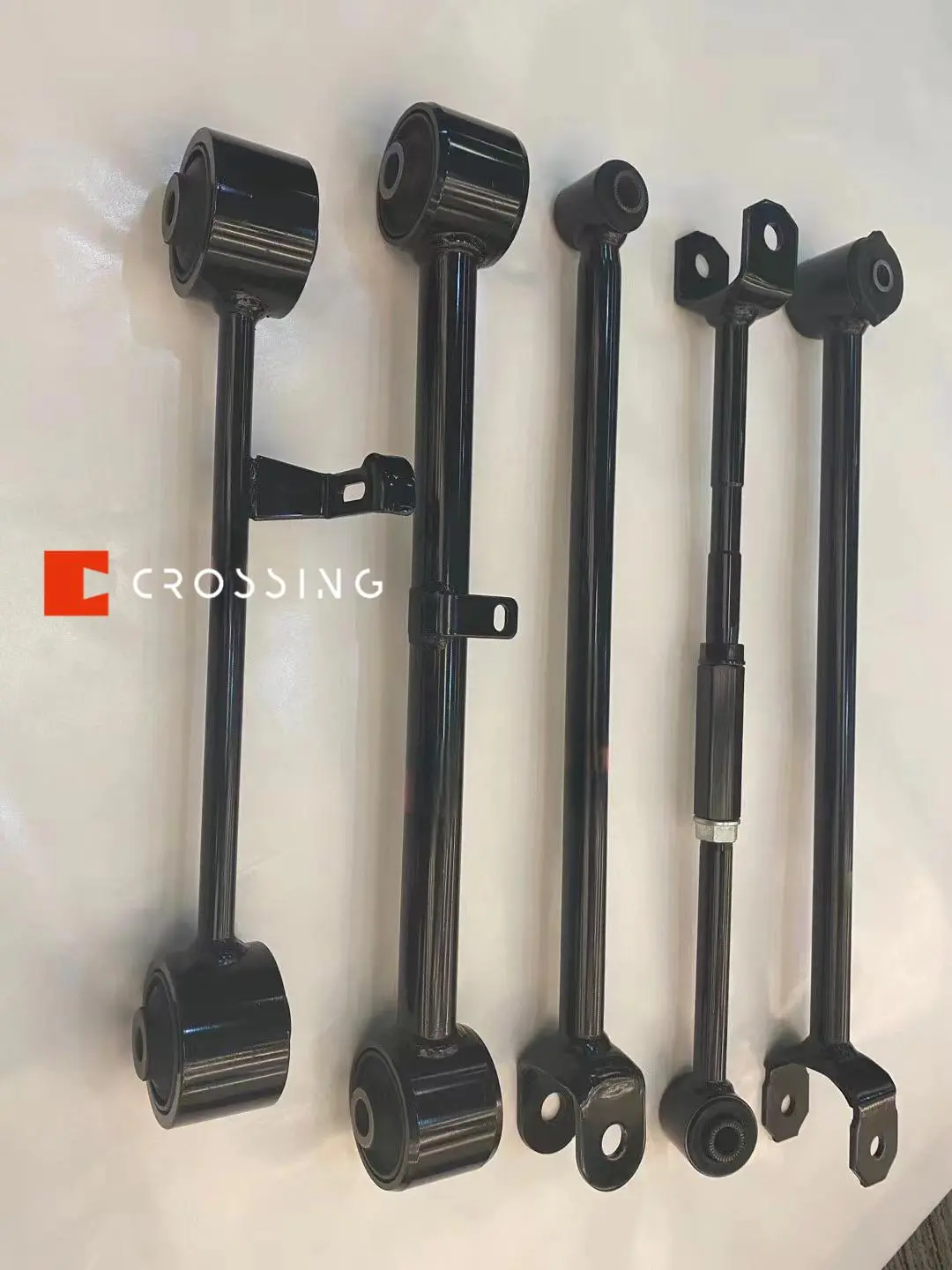
What is Lateral Control Rod Assembly?
Lateral Control Rod is a critical component in the suspension system of a vehicle, playing a fundamental role in maintaining stability, handling, and overall ride quality. With outstanding tensile and compressive load between frame and wheels to play the role of isolation.
This component is part of a broader category of suspension parts known as Control Arms/Rod, also called Rear Axle Track Control Arm Rod, Control rod and Axle rod, which are integral to the vehicle’s dynamics by linking the axle to the vehicle’s frame or body.
Function and Design of Rear Axle Track Control Rod
How is works during car operation?
- The primary function of the rear axle lower track control rod is to control the movement of the rear axle during acceleration, braking, and cornering. It serves to maintain the correct alignment of the wheels relative to the vehicle frame and each other, ensuring that the wheels do not experience excessive lateral movement. This is especially important during dynamic driving situations where forces act on the vehicle from multiple directions.
The construction of Control Rod / Axle Rod
- In terms of design, the rear axle lower track control rod typically consists of a robust metal structure that can withstand significant forces. It is often engineered with an appropriate level of flexibility to allow for suspension travel while maintaining rigidity to ensure that the rear axle remains properly positioned. Many modern designs incorporate bushings or ball joints, which provide a pivot point for the rod and help absorb road vibrations, thus enhancing ride comfort.

Manufacturing Process
Since various materials and processes have been introduced in detail in previous articles, in order to avoid repetition and tediousness, only the name of the production process is mentioned here without detailed description
- Steel pipe processing and cutting – Intermediate Connecting Rod, Link and Connecting pipe of products
- Metal Steel stamping and Shap – U-shaped steel plate. Bracket if have
- Weld of above accessories – Crossing products provide Robot-Arm Welding to improve weld consistency and strength
- Finishing treatment – Electrophoresis treatment to ensure excellent finishing and anti-rust resistance
- Assembly of Bushing and Ball Joint
- Inspection process
What are the bad symptoms of a Axle Rod
Bush deterioration
One of the most frequently observed faults in rear lateral links is the occurrence of bush deterioration. The bush is an integral part of the lateral link, connecting it to the vehicle’s chassis and allowing for controlled movement. Over time, exposure to road conditions, temperature fluctuations, and vehicular wear can lead to the degradation of bush materials, resulting in a loss of elasticity. This deterioration manifests in various symptoms, including a decrease in ride comfort, increased noise during operation, and premature tire wear due to misalignment
Bending or fracturing of the lateral link
This problem typically arises from excessive loads or impacts, such as hitting a pothole or during aggressive cornering. A bent or broken link can severely compromise the suspension geometry, leading to handling issues and increased risk of accidents. Additionally, if a lateral link fails completely while driving, it can lead to catastrophic loss of control.

Corrosion and Rust
Corrosion is another significant concern for rear lateral links, particularly in regions where roads are treated with salt during winter months. The metal components of the lateral link are susceptible to rust, which can weaken the structural integrity over time. While some modern vehicles utilize corrosion-resistant materials, many older models remain vulnerable
Importance in Vehicle Performance
The effective functioning of the rear axle lower track control rod significantly impacts various aspects of vehicle performance. One of the most notable effects is on handling. A well-maintained control rod ensures that the rear axle remains aligned with the vehicle’s frame, allowing for better traction and stability during cornering. In contrast, a worn or damaged control rod can lead to misalignment, causing the vehicle to handle unpredictably, which can affect driver confidence and safety.
Moreover, the rear axle lower track control rod plays a pivotal role in tire wear. Properly aligned wheels reduce the risk of uneven tire wear, thereby prolonging the lifespan of the tires and improving fuel efficiency. In essence, the control rod not only supports vehicle performance but also has economic implications for maintenance and longevity.
Crossing related products as below:


