
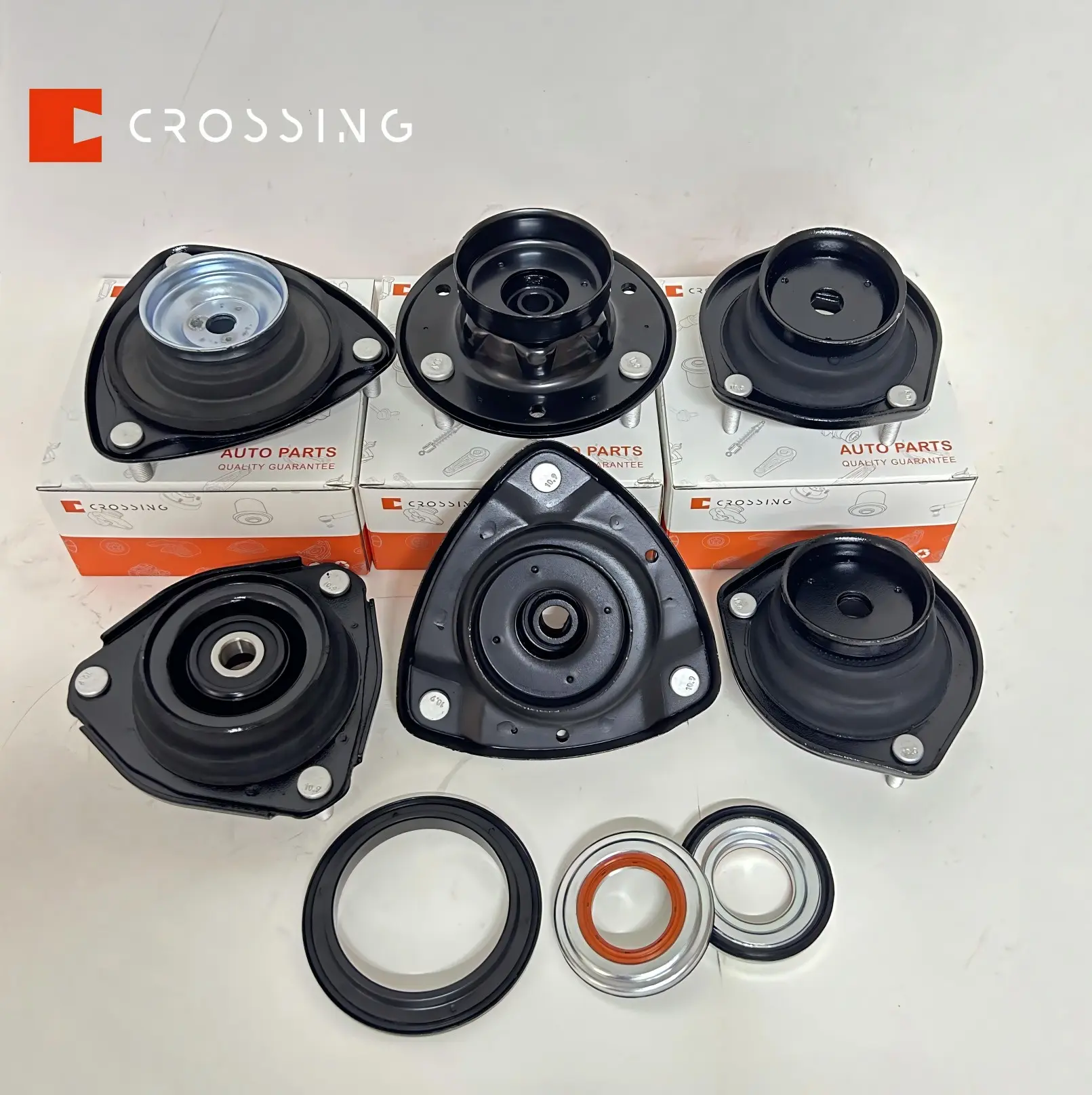
How to manufacturing a qualified Strut Mount
The strut mount, a critical component in the suspension systems of vehicles, plays a vital role in ensuring optimal ride quality and vehicle handling.
This essay provides a comprehensive analysis of the design and production processes involved in the development of strut mounts, focusing on the necessary engineering principles, construction, materials selection, manufacturing methodologies, and quality assurance measures that are crucial to producing effective and reliable strut mounts
Design Considerations
- The design phase of a strut mount is governed by several engineering principles, including mechanical performance, durability, vibration isolation, and space constraints. A strut mount must effectively support the vehicle’s weight while accommodating dynamic loads that result from road irregularities, vehicle acceleration, and braking forces.
- To achieve these objectives, computer-aided design (CAD) software is often employed to create precise 3D models. Finite element analysis (FEA) plays a critical role in assessing the structural integrity of the design under different load conditions. Through simulations, engineers can identify the potential failure points and optimize the geometry of the mount for strength and weight. Additionally, the design must consider how the mount will interface with other suspension components, including the strut, chassis, and wheel assembly, ensuring proper alignment and functionality.
Material and Construction of Strut Mount
The choice of materials is paramount in strut mount production, as it directly influences performance characteristics such as strength, weight, cost, and vibration dampening qualities. Common materials include high-strength steel, aluminum, natural rubber, bearing and composite polymers.
Below is the construction of Corolla strut mount #48609-02180

While steel offers exceptional strength and fatigue resistance, it can be heavier, which may impede the overall performance of the vehicle. Aluminum, with its lightweight properties, is often favored for performance vehicles; however, cost considerations and fatigue performance are crucial factors that can limit its usage. Composite materials, particularly elastomers, are frequently utilized in the design of strut mounts due to their superior vibration dampening capabilities, enhancing passenger comfort while reducing noise and harshness.
Different cars with different design of the products material, so as the after market manufacturer, we shall structly follow the original design and material.
Manufacturing Process
Different Shock Absorber Mount’s design and production process are also different, typically involving these basic steps.
Stamping and Forging:
- The production typically begins with the stamping or forging of metal parts. Stamping involves shaping metal sheets into precise forms using high-pressure presses, while forging utilizes compressive forces to shape metal parts. It will have several times till it reach to the right shape as designed
Machining
- After forming, components may require machining to ensure critical dimensions are met, this step is essential in maintaining tolerances for proper fitting within the suspension system. also sand basting proceses is one of the commenly surface treatment, to achieve a fine surface finish and preparation work for vulcanization.
Gluing
- The gluing process serves as a critical preliminary step before the vulcanization of rubber, ensuring optimal adhesion between the rubber components and any reinforcing materials, such as textiles or metal inserts. This process involves the application of specialized adhesives designed to withstand the high temperatures and pressures encountered during vulcanization, which transforms the rubber into a durable and elastic form. To achieve effective bonding, surfaces must be meticulously prepared, often requiring cleaning and priming to enhance adhesion
Injection Molding
For the rubber or composite elements, injection molding is often employed. This process allows for the mass production of complex geometries, enabling the incorporation of design features that optimize vibration damping and noise reduction.
- The Temperature, Pressure and Time are the most essential point for vulcanization process
Trimming and Assembly
After vulcanization, by removing any flash or residual material that may form around the edges of the strut mount during the vulcanization process. To keep the overall aesthetic appeal of the strut mount.
Following individual part production, assembly takes place. This stage combines all components, including the metal core, rubber isolators, and fasteners, ensuring that each strut mount meets design specifications.
Inspection and Quality Control
Quality assurance is integrated throughout the production process, from the selection of raw materials to the final inspection of the assembled product. Which called Incoming Quality Control (IQC) — In-Process Quality Control (IPQC) — Final Quality Control (FQC)
Techniques such as non-destructive testing (NDT), dimensional inspections, and performance testing ensure that each strut mount adheres to stringent quality standards and performance criteria.
Each type of rubber serves a unique purpose in the construction of automotive belts, ensuring that the products can withstand the rigors of driving conditions while maintaining performance.
While steel remains a staple due to its strength and affordability, the transition to aluminum and composite materials reflects the automotive industry’s ongoing pursuit of innovation and efficiency. Additionally, rubber and elastomers play an indispensable role in enhancing ride comfort and minimizing vibrations. As technology continues to evolve, the materials and processes in suspension part manufacturing will likely advance, paving the way for even more efficient and high-performing vehicles. Understanding these materials and their properties not only aids manufacturers in making informed choices but also assists consumers in discerning the quality and performance of their vehicles.
Crossing related products as below:


