

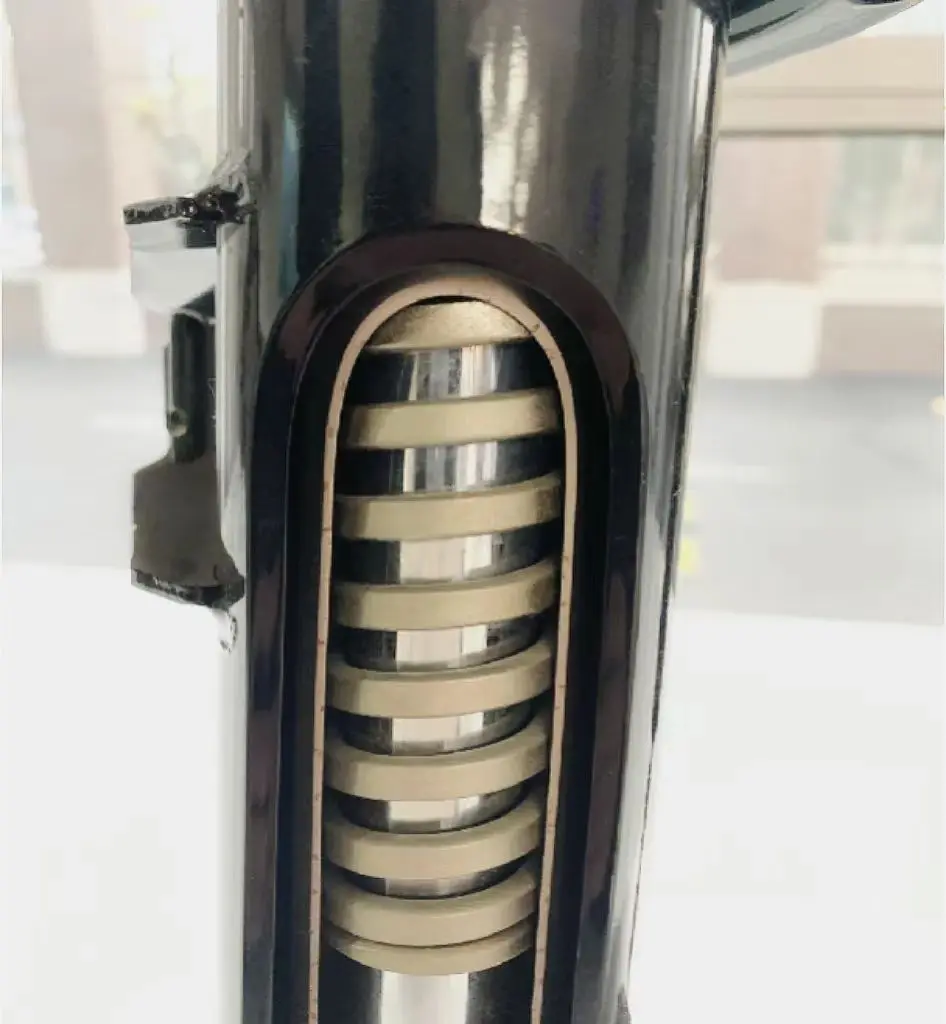
What is the construction of Shock Absorbers
At its core, a shock absorber is a device designed to absorb and dissipate kinetic energy generated by road irregularities. This function is accomplished through an intricate assembly of components that collectively work to control the motion of the vehicle’s springs and prevent excessive oscillation.
The construction of shock absorbers is a meticulous process involving several key components, which collectively contribute to their effectiveness and functionality. The primary components include:
Outer Cylinder
Often made from steel or aluminum, the outer cylinder encases the shock absorber’s inner components. This robust casing provides structural integrity and houses the hydraulic fluid necessary for the operation of the shock absorber. And can withstand significant environmental stresses, such as corrosion and physical impact.
Piston
The piston rod is a slender, elongated component that connects to the vehicle’s suspension system. As the suspension compresses and rebounds, the piston rod is forced in and out of the outer cylinder, allowing for the dynamic movement that defines shock absorption
Piston Rod
At the heart of the shock absorber is the piston, often fitted with hydraulic seals. This component moves within the cylinder, compressing and decompressing the hydraulic fluid or gas to create the damping effect. The design and treatment of the piston are critical for ensuring smooth operation and preventing wear.
Cylinder
The cylinder provides the chamber in which the piston operates. It is filled with hydraulic fluid or gas, shaping the characteristics of the shock absorber with regards to performance and response.
Piston Assembly
Located within the outer cylinder, the piston is a critical component that divides the cylinder into two chambers: the compression chamber and the rebound chamber. The piston is perforated with valves that regulate the flow of hydraulic fluid between the two chambers to control the rate of damping during compression and rebound movements.
Damping Valves
These valves control the flow of fluid through the piston as it moves. The configuration of the valves determines the shock absorber’s damping characteristics, shaping responses to different road conditions by either restricting or permitting fluid movement.
Hydraulic Fluid
The medium through which energy is dissipated, hydraulic fluid plays a fundamental role in shock absorbers. This oil-like substance is essential for transferring energy between the piston and the outer casing while maintaining the system’s operational temperature.
Mounting Hardware
Mounting components such as bushings, collars, and nuts secure the shock absorber to the vehicle, allowing for precise alignment with the suspension system and optimizing its performance.
Gas Chamber
In many contemporary designs, a gas-filled chamber, typically containing nitrogen, is incorporated to prevent cavitation and foam generation within the hydraulic fluid during rapid compression.


Materials Utilized in Construction
The selection of materials for shock absorber construction is driven by the need for strength, durability, and lightweight characteristics. The most commonly used materials include:
Steel: Known for its strength and ductility, steel is frequently employed in the outer cylinder and piston rod. High-carbon steels may be utilized to enhance strength and resistance to wear.
Aluminum: As a lightweight alternative to steel, aluminum is often chosen for applications where weight reduction is critical. Its corrosion resistance and thermal conductivity make it a favorable option for performance-oriented shock absorbers.
Rubber and Polyurethane: These materials are utilized in the bushings and seals of shock absorbers. Their elastic properties help to absorb vibrations and contribute to the overall damping effect.
Hydraulic Fluids: Specific formulations of hydraulic fluids are engineered to provide consistent viscosity, thermal stability, and resistance to foaming, which is fundamental to the effective operation of the shock absorber.
Manufacturing Processes
The construction of shock absorbers involves several intricate manufacturing processes, each contributing to the precision required for effective operation.
Metal Forming
Techniques such as forging, machining, and stamping are employed to fabricate various components. The outer cylinder is typically either machined from solid metal or drawn from sheet metal, while the piston rod is often manufactured through precision machining processes.
Surface Treatment
To enhance durability and resistance to corrosion, surface treatments such as anodizing for aluminum components or electropheresis & painting for steel can be applied.
Assembly
After all components are fabricated, the assembly process involves carefully installing the piston rod and piston assembly into the outer cylinder, followed by the introduction of hydraulic fluid and gas into their respective chambers.
Conclusion
The construction of shock absorbers is a testament to the intersection of material science, engineering prowess, and technological innovation. As a central component of vehicular dynamics, shock absorbers not only enhance ride comfort but also play a critical role in ensuring safety and performance. As automotive technology continues to evolve, we can anticipate even greater advancements in shock absorber design and function, paving the way for enhanced driving experiences in the future. Understanding the intricacies of shock absorber construction offers valuable insights into the broader landscape of automotive engineering and the relentless pursuit of improved vehicle performance.
Crossing related Shock Absorbers as below:


